
What are Mass Intentions
A Mass intention is one of the most profound ways the Church prays for the living and the dead. Rooted in the earliest Christian tradition, offering a Mass for a specific intention unites that prayer to the saving sacrifice of Christ Himself. This article explains what Mass intentions are, why they matter, and how the Church carefully safeguards their sacred character.
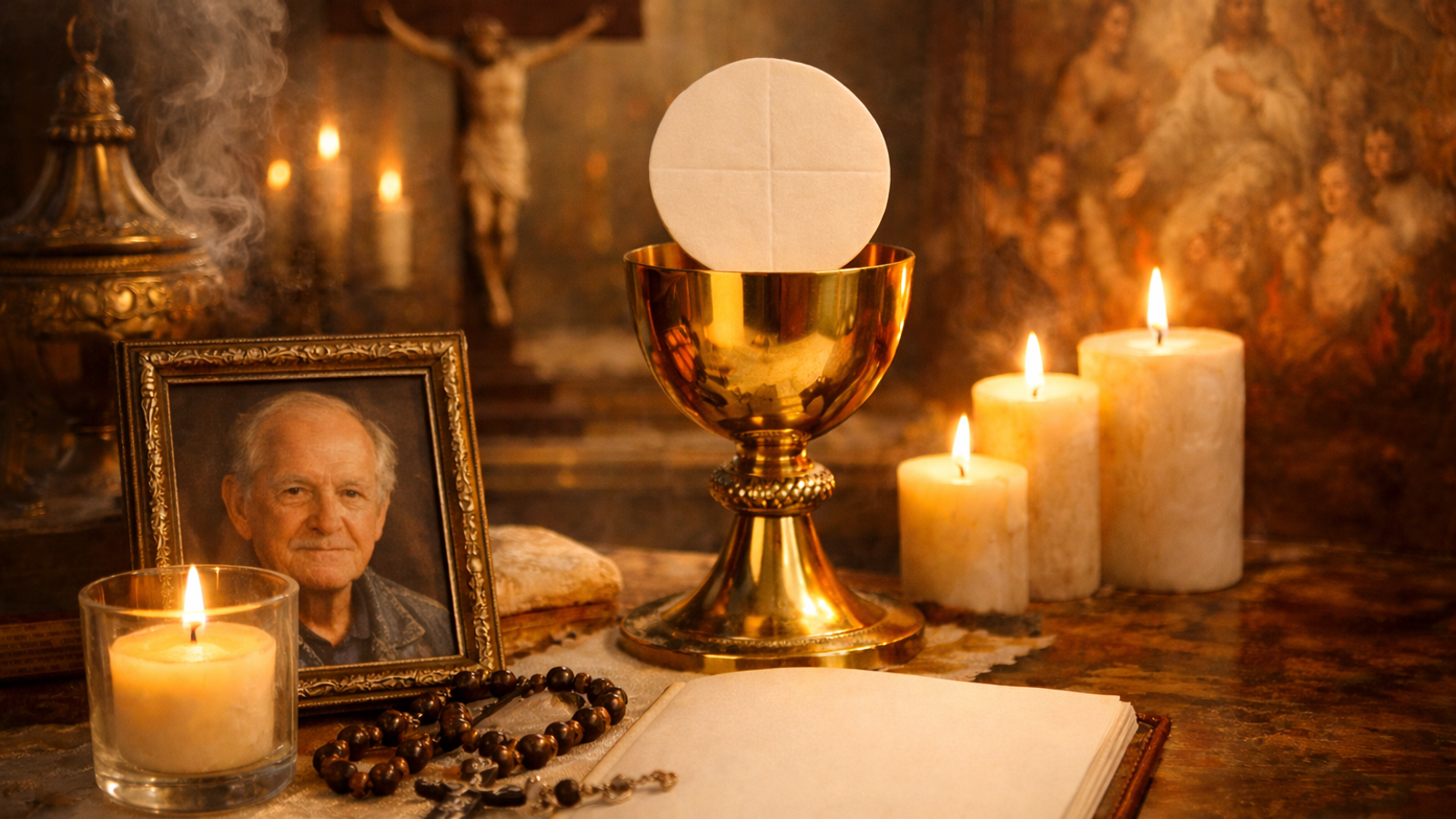
From the earliest days of the Church, Christians have gathered to offer the Holy Sacrifice of the Mass for particular needs, people, and intentions. A Mass intention simply means that a specific Mass is offered for a particular purpose: for a living person, for someone who has died, in thanksgiving, or for a special need. It is a quiet but powerful act of faith, rooted in the Church’s understanding that the Mass is the greatest prayer we can offer.
At every Mass, Christ’s one sacrifice on Calvary is made present. The graces that flow from a Mass offered for a specific intention are the very graces merited by Our Lord Jesus Christ through the offering of His own life on the Cross. Nothing greater can be given. Nothing more powerful can be asked.
A Tradition as Old as the Church
The practice of offering Masses for specific intentions is not a medieval invention or a later custom added on. From the beginning, Christians prayed for the living and the dead during the Eucharistic celebration. Inscriptions in the Roman catacombs, writings of the early Church Fathers, and ancient liturgical texts all testify to this practice.
Very early on, the Church understood in a particular way the importance of offering Masses for those who had died. If death does not break the bond of charity within the Body of Christ, then prayer does not end at the grave. Offering Masses for the dead became, and remains, one of the most concrete expressions of Christian hope in the resurrection and in God’s mercy.
Why Mass Intentions Matter
The Mass is not simply one prayer among many. It is the prayer of Christ Himself to the Father, offered through the hands of the priest. For this reason, offering a Mass is the greatest form of prayer.
When a Mass is offered for a specific intention, the priest applies the fruits of that Mass in a particular way for that intention. This does not limit God’s generosity, nor does it exclude anyone else present. Rather, it focuses the Church’s prayer, like sunlight through a lens, on a specific need or person.
This is why the Church has always encouraged the faithful, especially, to request Masses for the dead. The best way to help the souls in purgatory is to pray for them, and in a unique and privileged way, to offer Masses for the repose of their souls. It is an act of love that reaches beyond time and death.
About Stipends: What Mass Intentions Are Not
It is important to be very clear about something that is often misunderstood: Masses are not purchased, and Mass intentions are not bought or sold.
When someone requests a Mass intention, it is customary to offer a stipend to the priest who celebrates the Mass. This practice goes back centuries and has always been understood as a voluntary offering. The stipend is not a payment for the Mass. The value of the Mass is infinite and cannot be priced.
A diocese may suggest a customary stipend amount, but it is never obligatory. A Mass may always be requested even if someone is unable to offer a stipend. There is no commercial transaction involved.
Canon Law carefully regulates stipends precisely to safeguard the sacred nature of the Mass. Normally, a priest may receive only one stipend per day, even if he celebrates multiple Masses. If additional Masses are celebrated with intentions on the same day, the stipends from those Masses are typically given to charitable causes, diocesan funds, seminarians, or retired priests, according to established norms.
This protects both the faithful and the priest, and it keeps the focus where it belongs: on prayer, not money.
Is the Name Required to Be Announced?
Another point that often needs clarification concerns the public mentioning of names at Mass.
When a Mass is offered for a specific intention, the Mass is truly and fully offered for that intention whether or not the name is spoken aloud. The essential element is the intention held by the priest who offers the Mass, not the public announcement.
Sometimes it is pastorally appropriate to mention the name of the deceased or the person for whom the Mass is offered, perhaps in the General Intercessions or at the beginning of Mass. This can be a comfort to family and friends. But it is not required.
The grace of the Mass does not depend on whether a name is read, printed, or announced. What matters is that the Holy Sacrifice is offered for that intention before God.
A Quiet but Powerful Act of Faith
Requesting a Mass intention is a deeply Catholic act. It expresses faith in the power of Christ’s sacrifice, love for those we pray for, and trust in God’s mercy.
Whether offered for the living or the dead, in sorrow or in thanksgiving, every Mass intention places a person or need at the very heart of the Church’s prayer. It is a humble request, but it draws upon the greatest treasure the Church possesses: the saving sacrifice of Jesus Christ, offered for us and for the life of the world.
Why Sacramentum Exists
Because Mass intentions are so sacred, the Church has always taken great care in how they are recorded, scheduled, and fulfilled. Sacramentum exists to serve that care. Its purpose is not to change the tradition, but to protect it: to help parishes receive intentions with clarity, to assist priests in honoring them faithfully, and to ensure that every intention entrusted to the Church is treated with reverence, transparency, and pastoral responsibility. In doing so, Sacramentum seeks to support the timeless mission of the Church by using modern tools to safeguard one of her most precious acts of prayer.